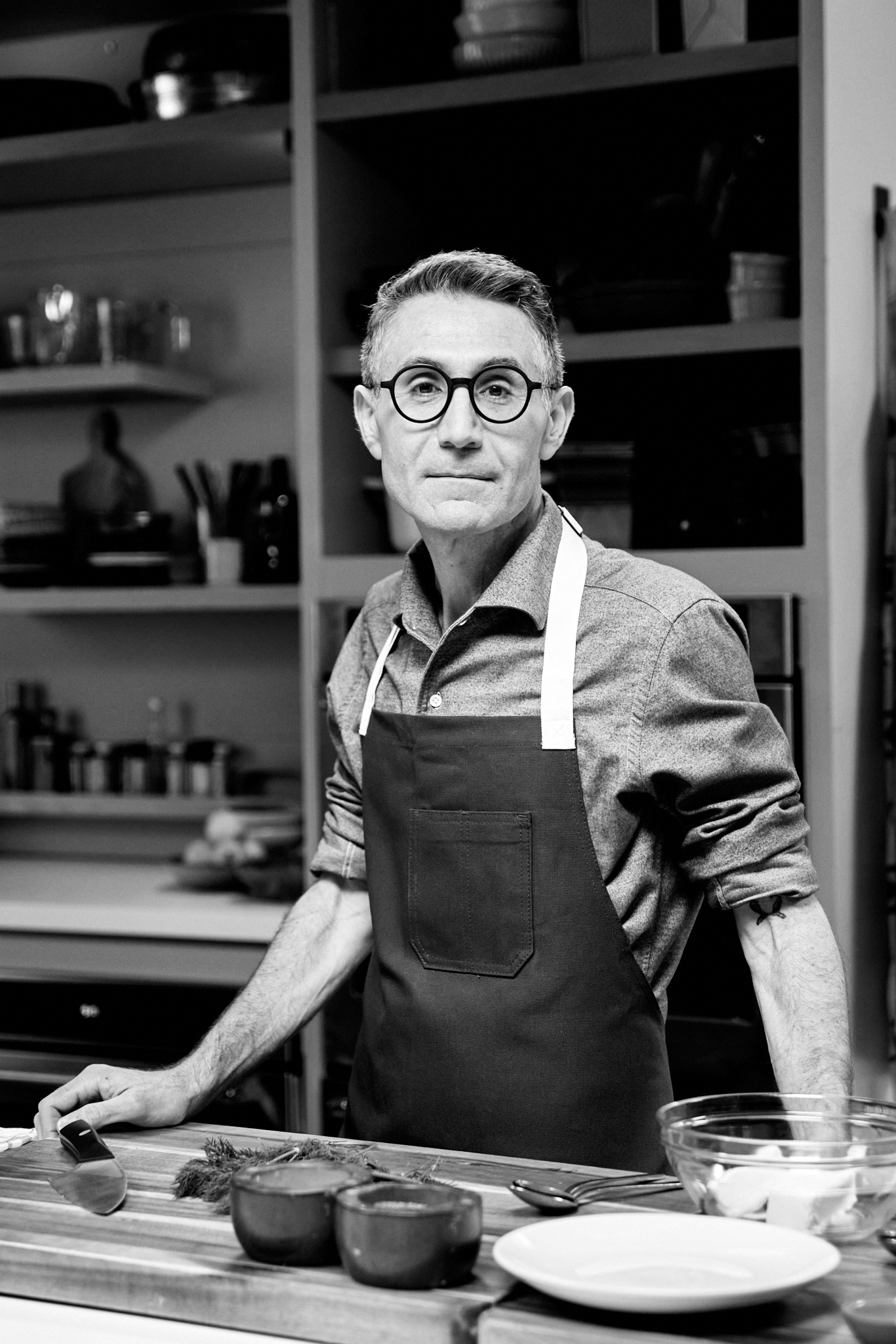
Damascus, Syria
Abu George: Where the Walls Whisper of Fernweh
At the oldest bar in one of the world's oldest cities, the walls yearn across time, voicing wanderlust in messages to no one and everyone.
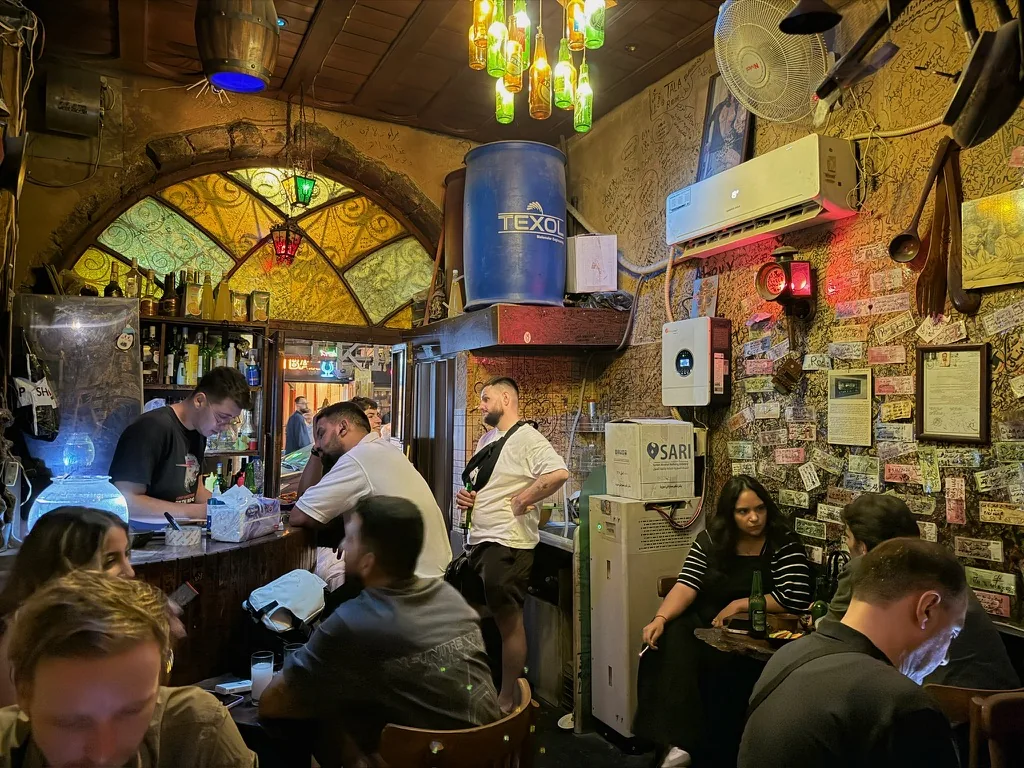
DAMASCUS, Syria — At the oldest bar in one of the world’s oldest cities, the walls yearn across time, voicing wanderlust in messages to no one and everyone.
“Proceeding despite the dangers.”
“No risk… No story… No story… No glory.”
“My love, I went on an adventure!”
Missives—thousands of them—scribed mostly in Arabic on a rainbow of currency are taped to the walls, compounding tales of swagger, longing and love creating a floor-to-ceiling tapestry decades in the making.
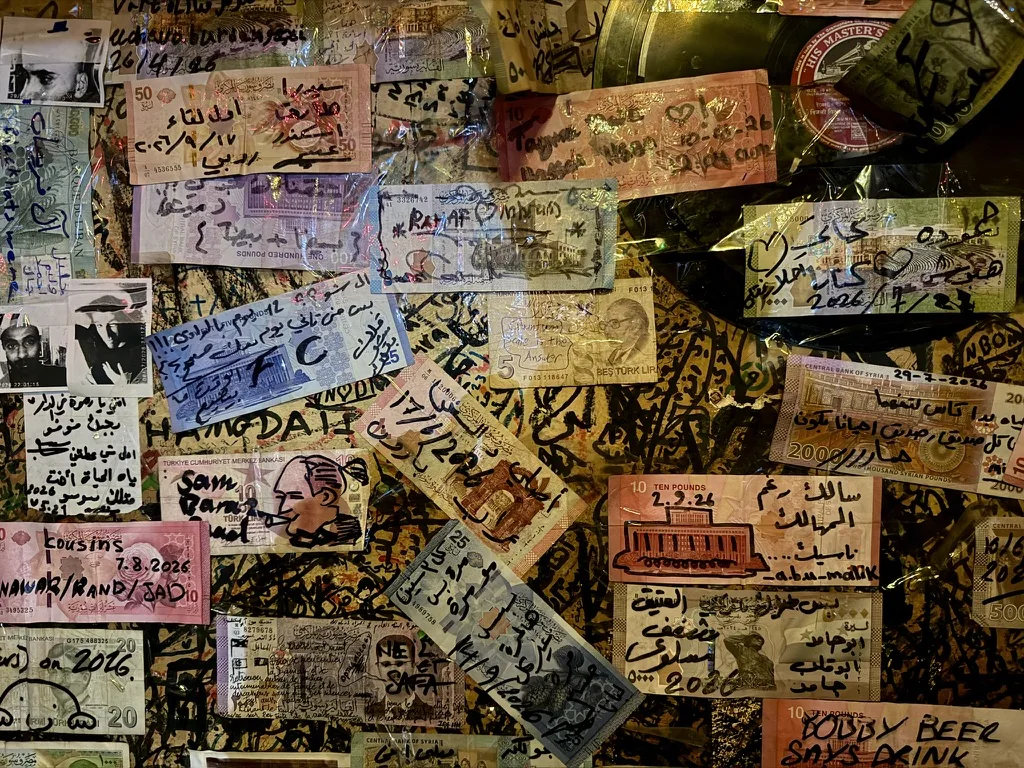
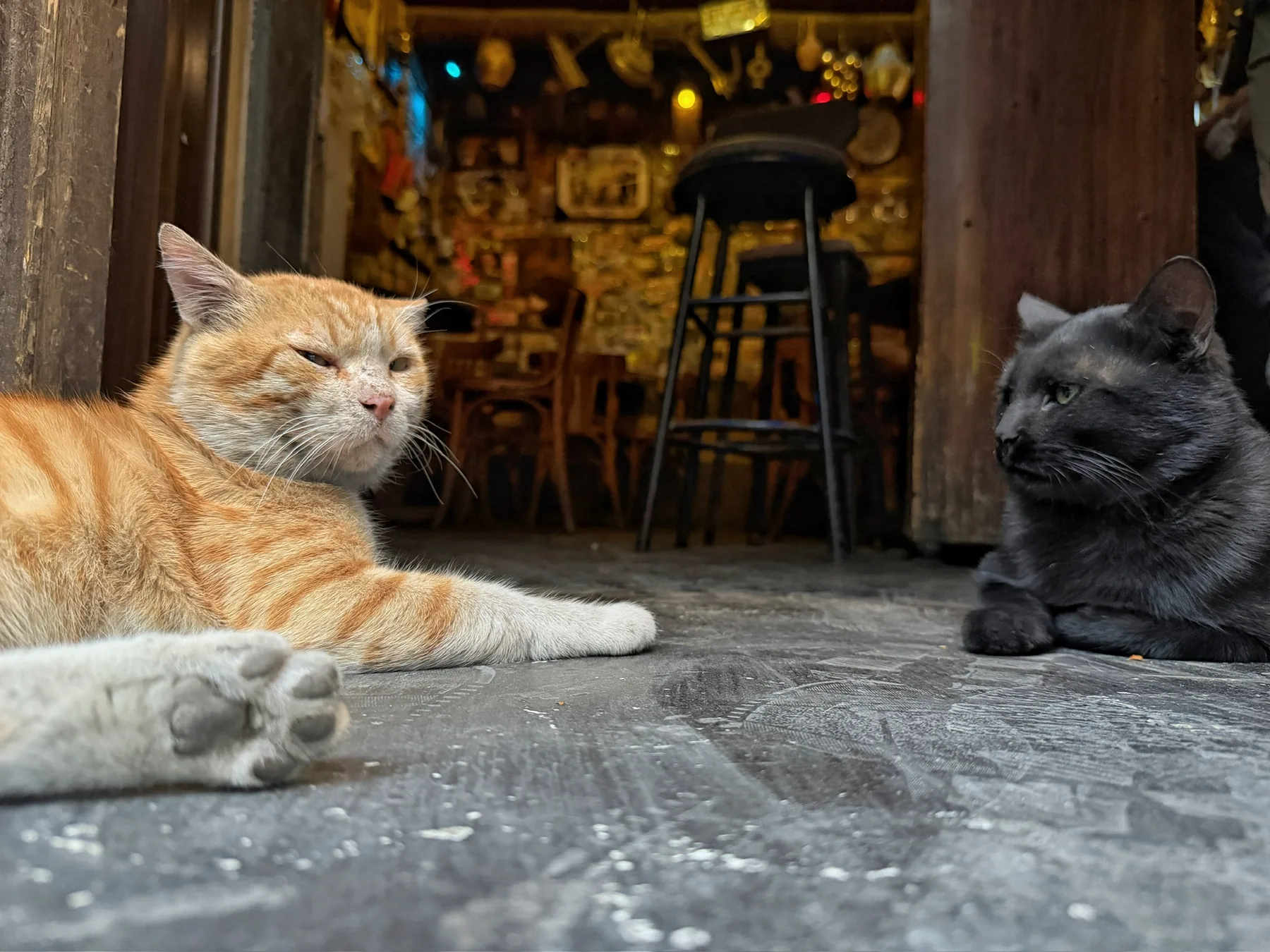
This is Abu George, a 14-seat bar in Old Damascus where wafts of aniseed mingle with malt. Where the cats get the best seats in the house. Where during the war, drinkers came “just to spite ISIS,” says a barely visible placard.
And your chance to see it is fleeting. By the end of the year, Abu George will be gone.
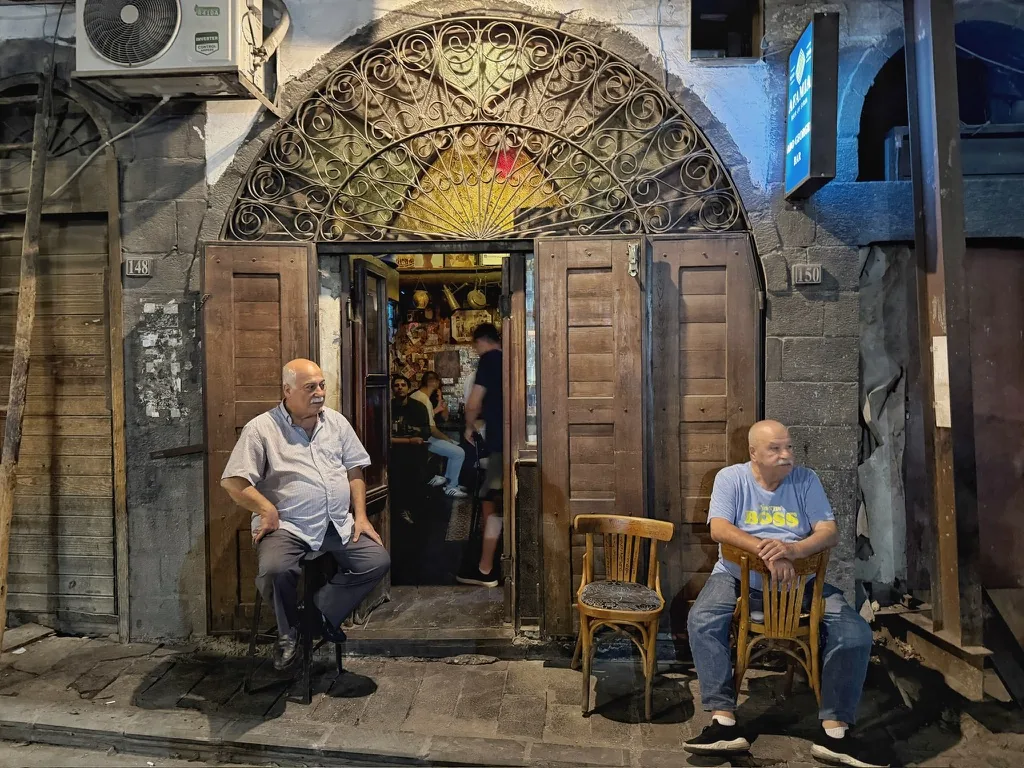
The spot has hosted a tavern since it was built in 1910. Jurji Salloum bought it from his brother sometime in the ’50s, in turn passing it to his sons, Ghassan and Michel, the latter’s nickname—Abu George—giving it its name.
Today, Ghassan can be found most nights perched on a stool on the sidewalk outside, periodically doddering in to fuss over the cats who command prime real estate. Michel, who started working at the bar when he was 7, died in 2024.
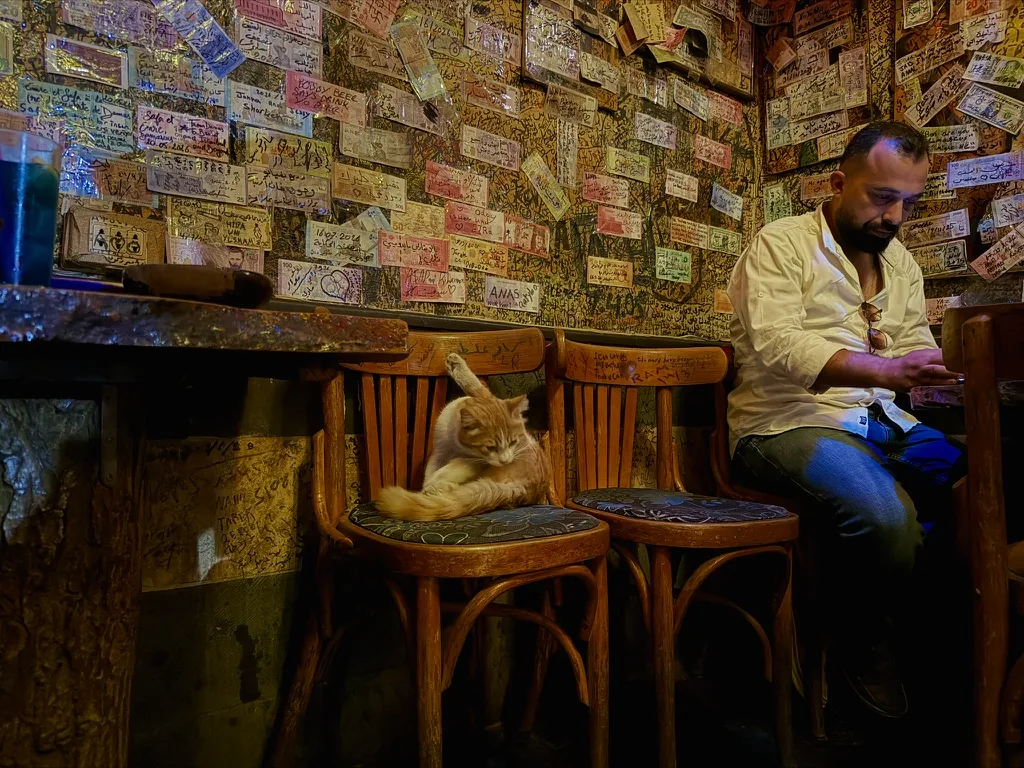
Bars are few and far in Syria, persisting in Damascus, but all but wiped out in Aleppo, destroyed by the Assad regime or shuttered following a spate of alcohol poisonings that killed 10 and sickened more than 100.
“Everybody here has a memory,” Ghassan said. “Everybody in Damascus has come here.”
But now he will sell it. A hotel will replace it. Fear is a factor.
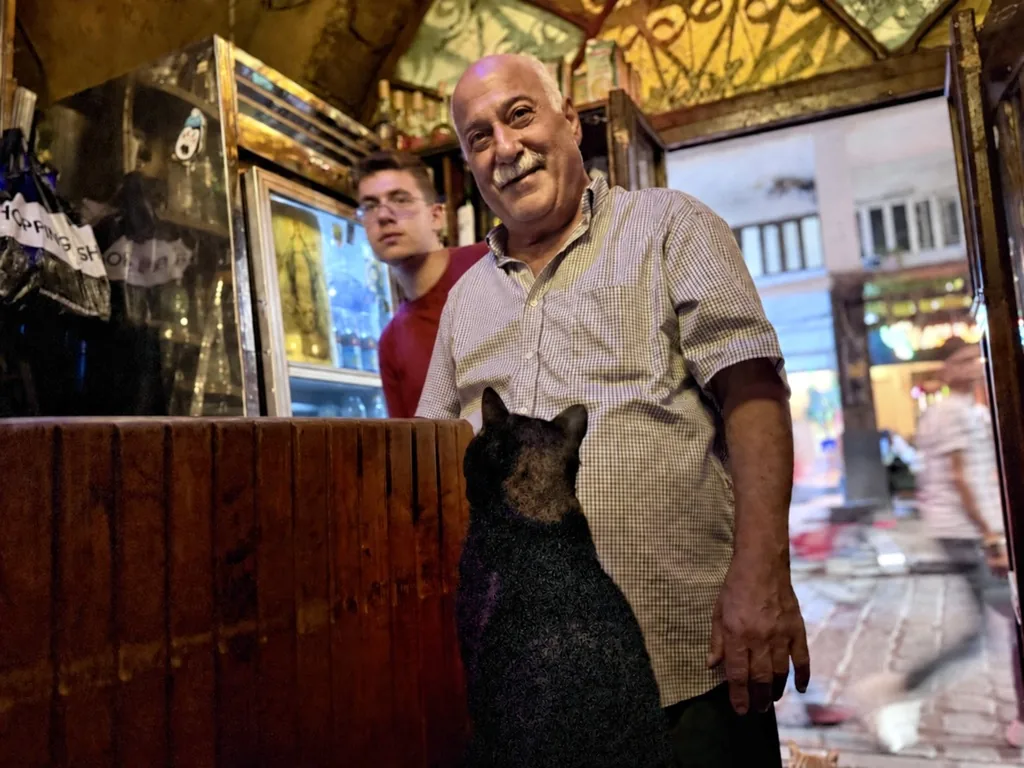
Assad is gone, but the new government is an unknown. He worries what they will do. And when an offer was made, he decided it was better to profit than persist.
“The government is Islamic. After two or three months, maybe they won’t allow drinking.”
Two or three months. It’s also the timeline he’s given himself to relocate Abu George to another, nearby spot. He is adamant.
“I’m sad that I will leave this place. But I will take it all,” he said, pointing to the walls. “All the messages.”
Originally shared as a dispatch from the field.