Kefraya, Lebanon
In Lebanon's Bekaa Valley, the Vines Whisper Secrets to Fabrice Guiberteau
At Château Kefraya, Fabrice Guiberteau listens to the land, tending vines and the people who care for them through Lebanon's wars.
By J.M. Hirsch
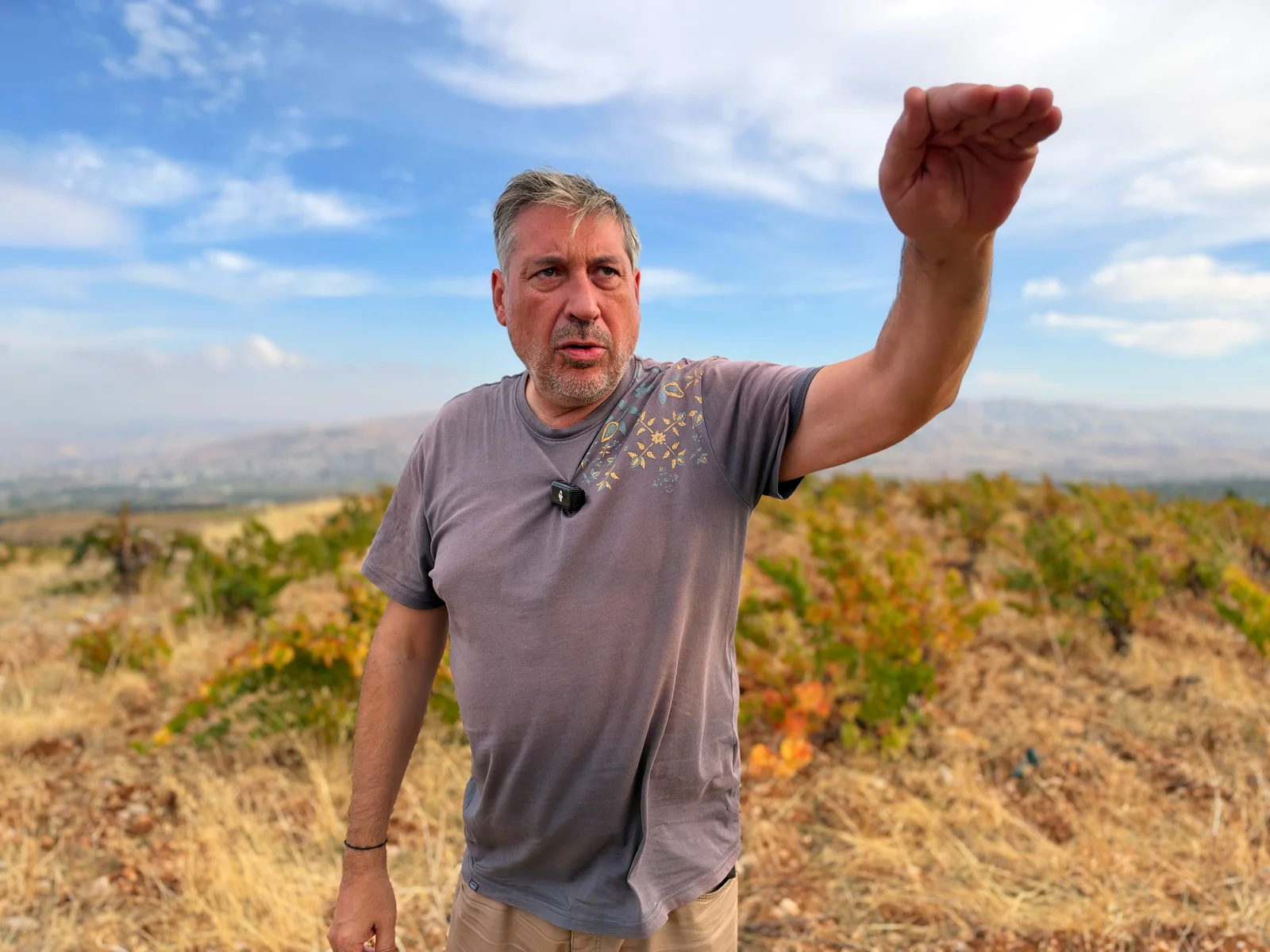
KEFRAYA, Lebanon — Fabrice Guiberteau listens—spiritually, reverently, almost mystically—to the land of the Bekaa Valley.
And through his grapevines, that land speaks volumes. Each of his thousands of vines whispers to him of past, present and future. Telling him what it wants, what it will give, what it will become in the bottle, what it will do in the glass.
"You have to observe, let the vine talk about herself," he said. "For me, making wine is not an art. It is a revelation of the terroir."
Guiberteau is from France, but has spent more than 20 years in Lebanon, a country that produces impossibly powerful wines. And whose people have been subjected to decades of equally powerful wars.
It's everywhere, he said, punctuating his point with videos from his phone showing the angry smoke of bombs hovering over his fields. But he stays at Château Kefraya, where he oversees winemaking. He is as committed to his staff as to his vines.
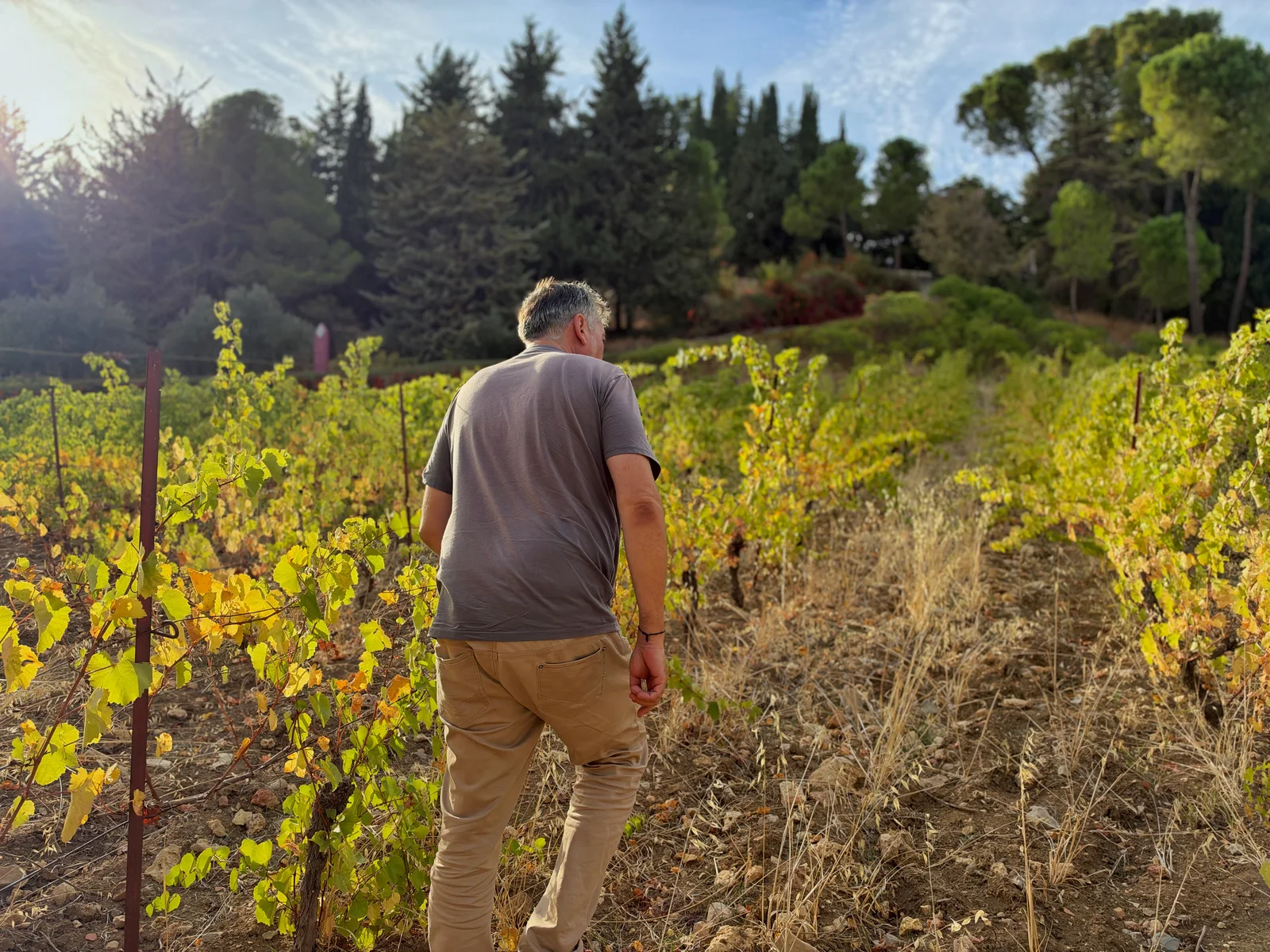
That commitment grounds him. Literally and figuratively.
"When you are a vine grower, you are linked to the soil," he said. "Making wine at Château Kefraya is like putting my feet into more than 2,000 years of history."
Winemaking is an ancient art in Lebanon. Theirs is the only wine named in the Bible.
But Guiberteau keeps his focus on the ground. No terroir is too small for him to tease messages from. Across the winery's 300 hectares, he has mapped out more than 77 microclimates, sometimes multiple in a single row of vines.
It allows him to select down to the vine which grapes become which wines.
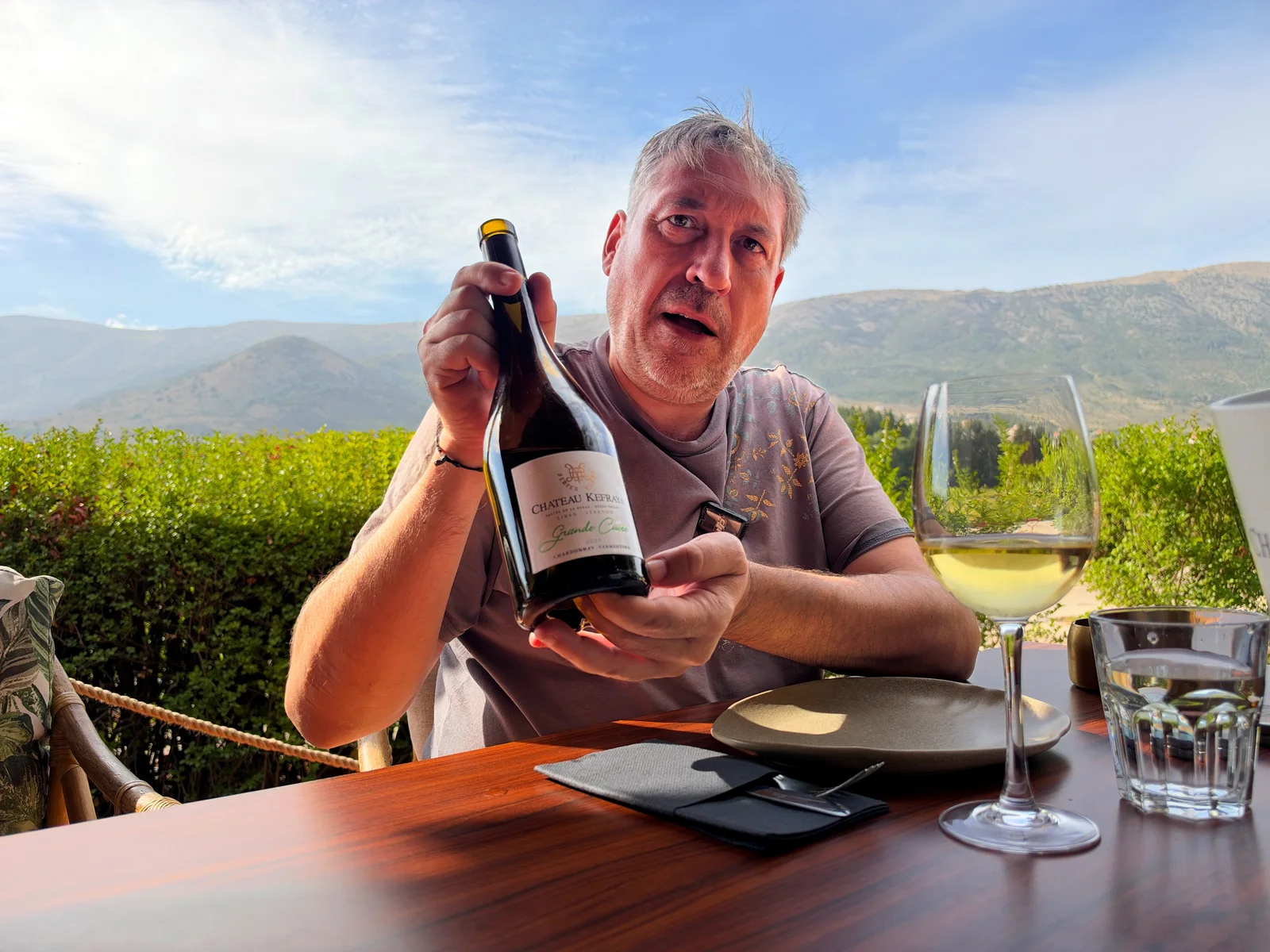
"For me, 97 percent of the wine quality is not coming from vinification," he said. "It comes from growing the vines the way you want the wine to be.
"Go to the vineyard and let the vines speak and tell you something."
Originally shared as a dispatch from the field. View the original post