Beirut, Lebanon
For Breakfast In Beirut, Fatima Msheik Says Time is the Most Important Ingredient
At Abu Kamel Café, Fatima Msheik makes manakish the traditional way—with natural yeast, practiced hands and time.
By J.M. Hirsch
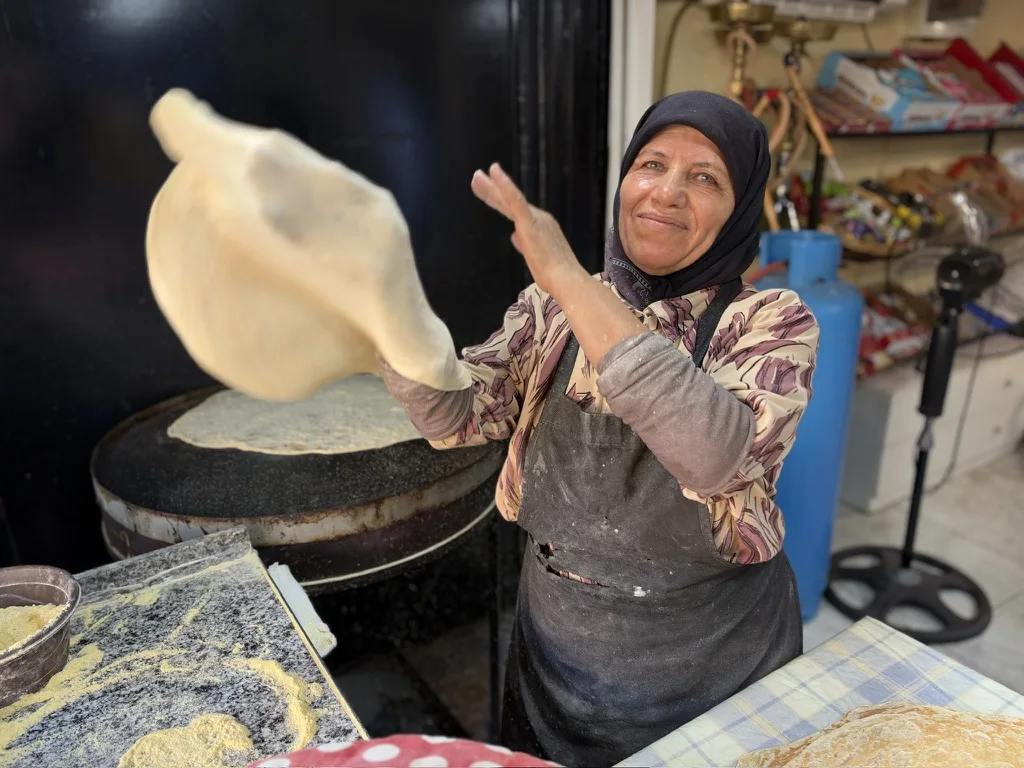
BEIRUT, Lebanon — Whole-wheat flour. Corn flour. Salt. Water. Most importantly, time.
Breakfast in Lebanon is built around flatbread, manakish griddled on demand and topped with a what-have-you that packs flavor best measured by how much can you handle.
Herby-tangy za'atar.
Mounds of briny akkawi cheese that eats like a mashup of feta and mozzarella.
Lahm bi ajeen, ground lamb seasoned with tomatoes, onions, cumin and chilies.
Basal banadoura, a seductive blend of tomatoes, onions, olive oil and sumac.
The list goes on.
Fatima Msheik is dismissive of how most cooks make manakish today. Too many rely on added yeast. She prefers time. She prefers the traditional way, the way her family taught her. Making the dough the day before and letting natural yeasts work sourdough magic for a day or so.
The saj where she cooks is tucked inconspicuously inside the entrance to Abu Kamel Café, a convenience shop along Imam Khomeini Avenue. And yes, the street is named for Ayatollah Ruhollah Khomeini, Iran's founder and former supreme leader.
Lebanon is complex. Breakfast is simple.
The shop is owned by Hassan Slim. They share the space. He lives upstairs. Downstairs he sells sodas and cookies and candies, his days quiet with shisha and friends. And he never hesitates to heap praise on Msheik. They share a palpable affection.
Originally from the Bekaa Valley, Msheik has sold manakish here for 16 years. And it shows in her ease with the dough.
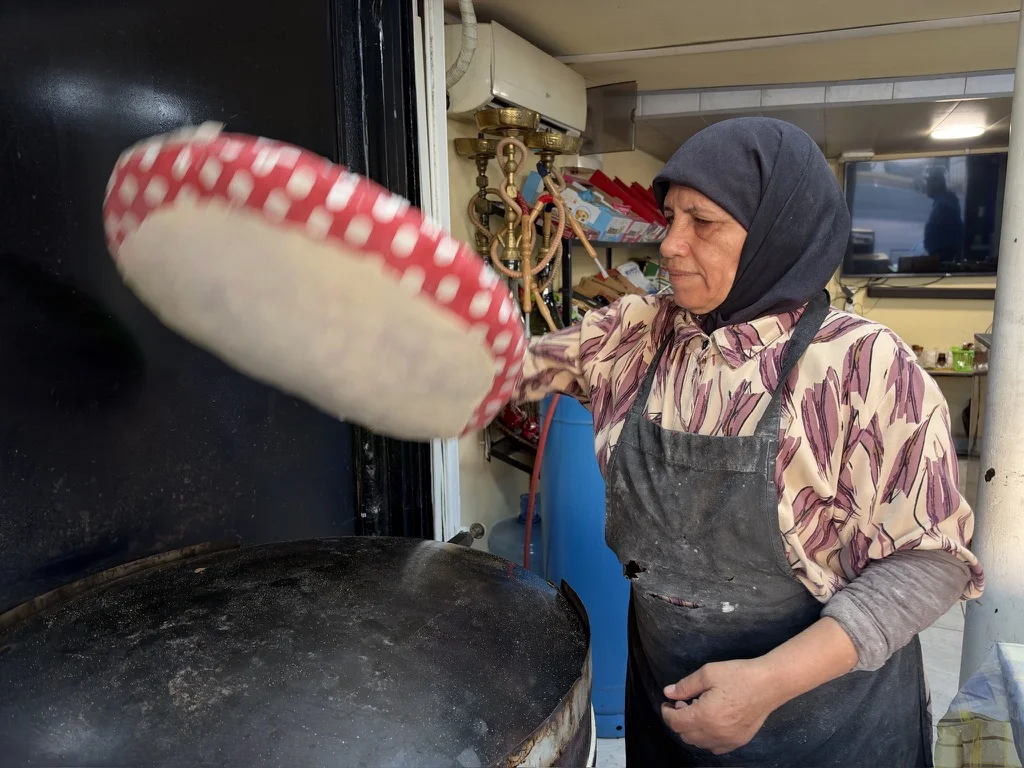
No rolling pins. No fussing. Just fingers and hands, pulling, pushing and pressing until each ball is supple, expanding with each touch. Eventually, she takes it airborne, letting it dance between her hands and grow more.
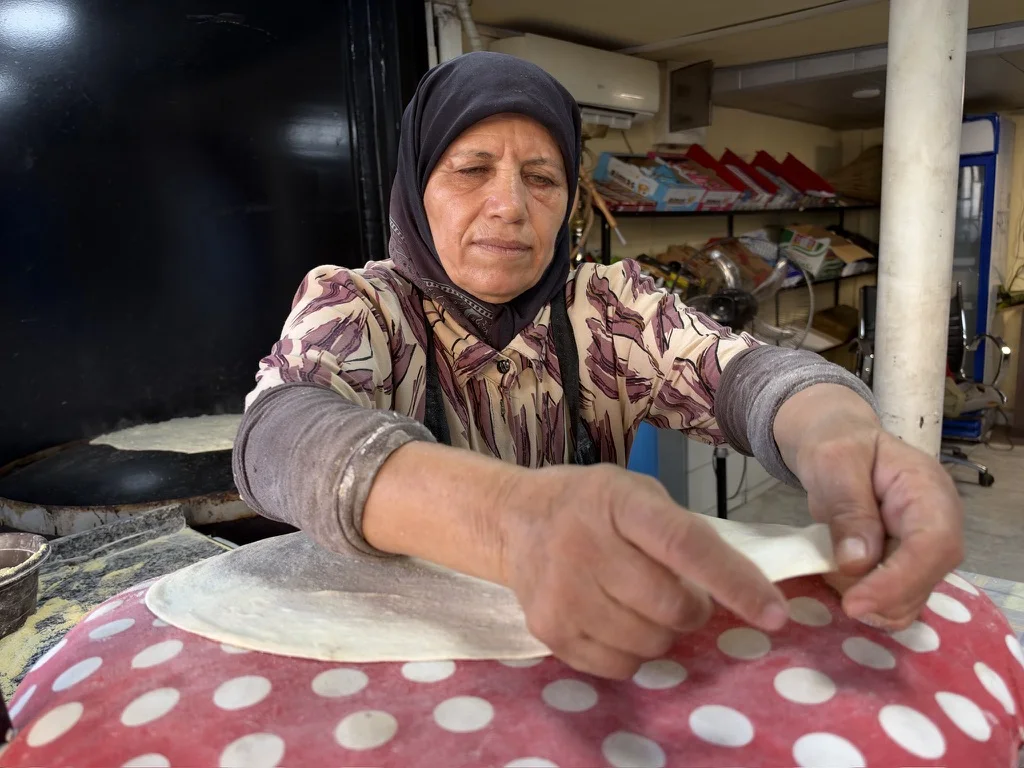
When she's satisfied, she stretches it across a red-and-white polka-dot pillow, a baking essential found across the Middle East.
With a smack you feel, she overturns the pillow, slamming the dough onto the saj, firmly planting it. Steam rises in an instant as the edges turn lacy and crisp.
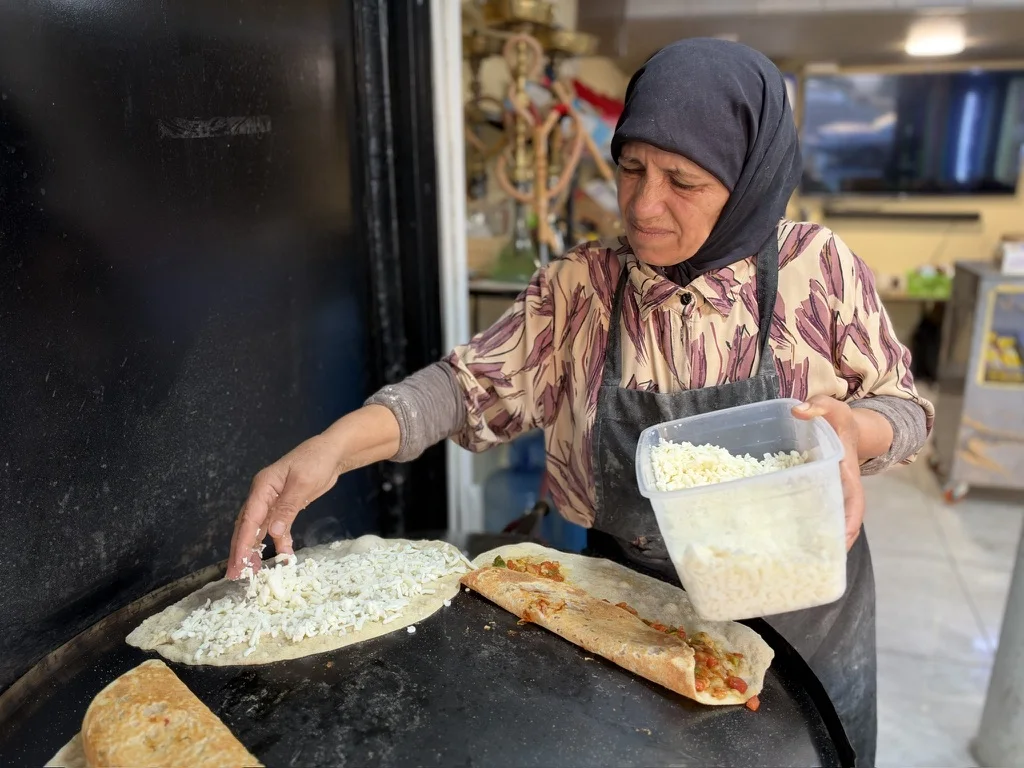
I opted for za'atar, here a potent blend of sesame seeds, sumac, thyme, oregano and salt mixed with the local olive oil the Lebanese will assure you can best any made in Italy or Greece. She spooned it thick over the dough and it sizzled and bubbled instantly.
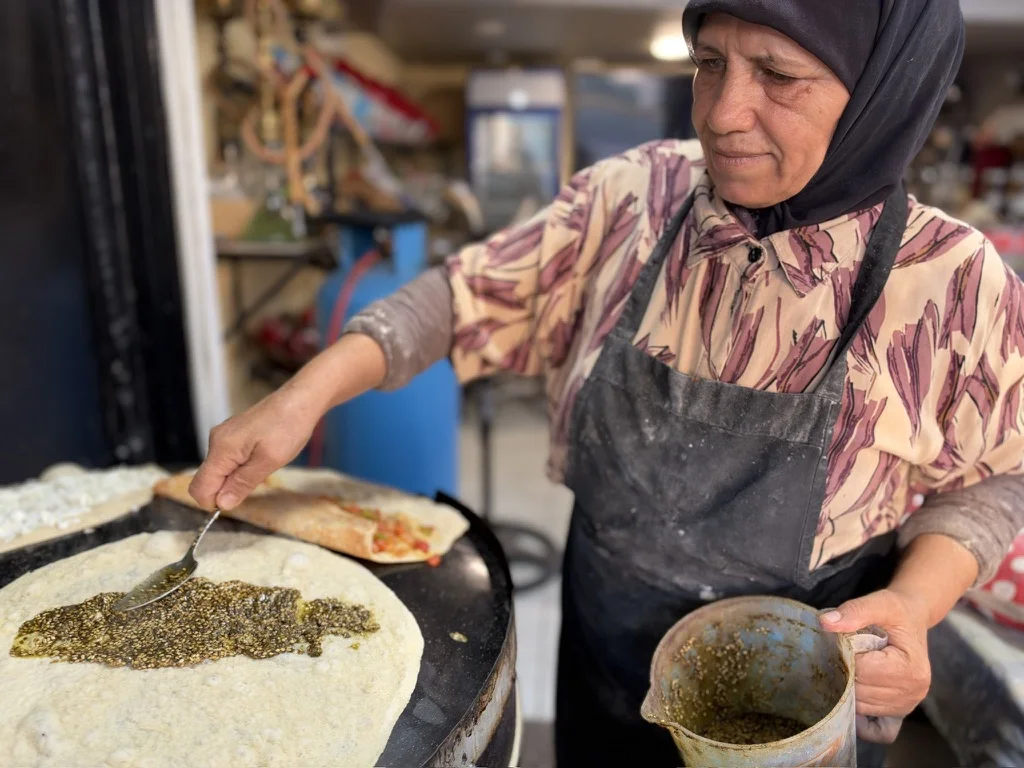
As the dough cooked on the domed griddle, Msheik used a wide putty knife to peel it-push it up and forward, folding it over itself like a letter, encasing the za'atar.
The whole process might have taken a minute or two.
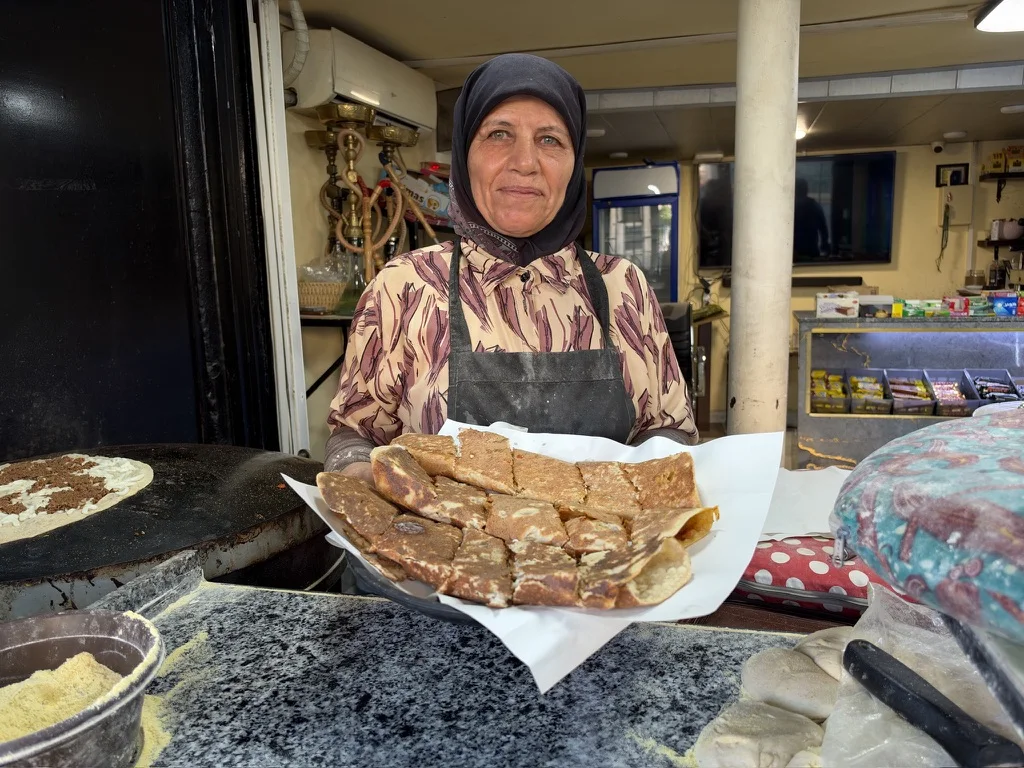
A pizza wheel renders the log into thick bundles, crispy outside, tender-chewy inside, the herbs and sumac hitting your nose before your tongue.
She sat with me on the sidewalk as I ate it. I insisted she join me for breakfast. Slim did, too.
A simple breakfast. A shared breakfast. An invitation for dinner followed.
A simple reminder of the real power of food.
Originally shared as a dispatch from the field. View the original post