Aleppo, Syria
At Muhammed Dbeghieh's Pepper Mill, the Air Smells Crimson
At a small mill in Aleppo, peppers fill the sidewalk, the rooftop and the air—and remain essential to the Syrian kitchen.
By J.M. Hirsch
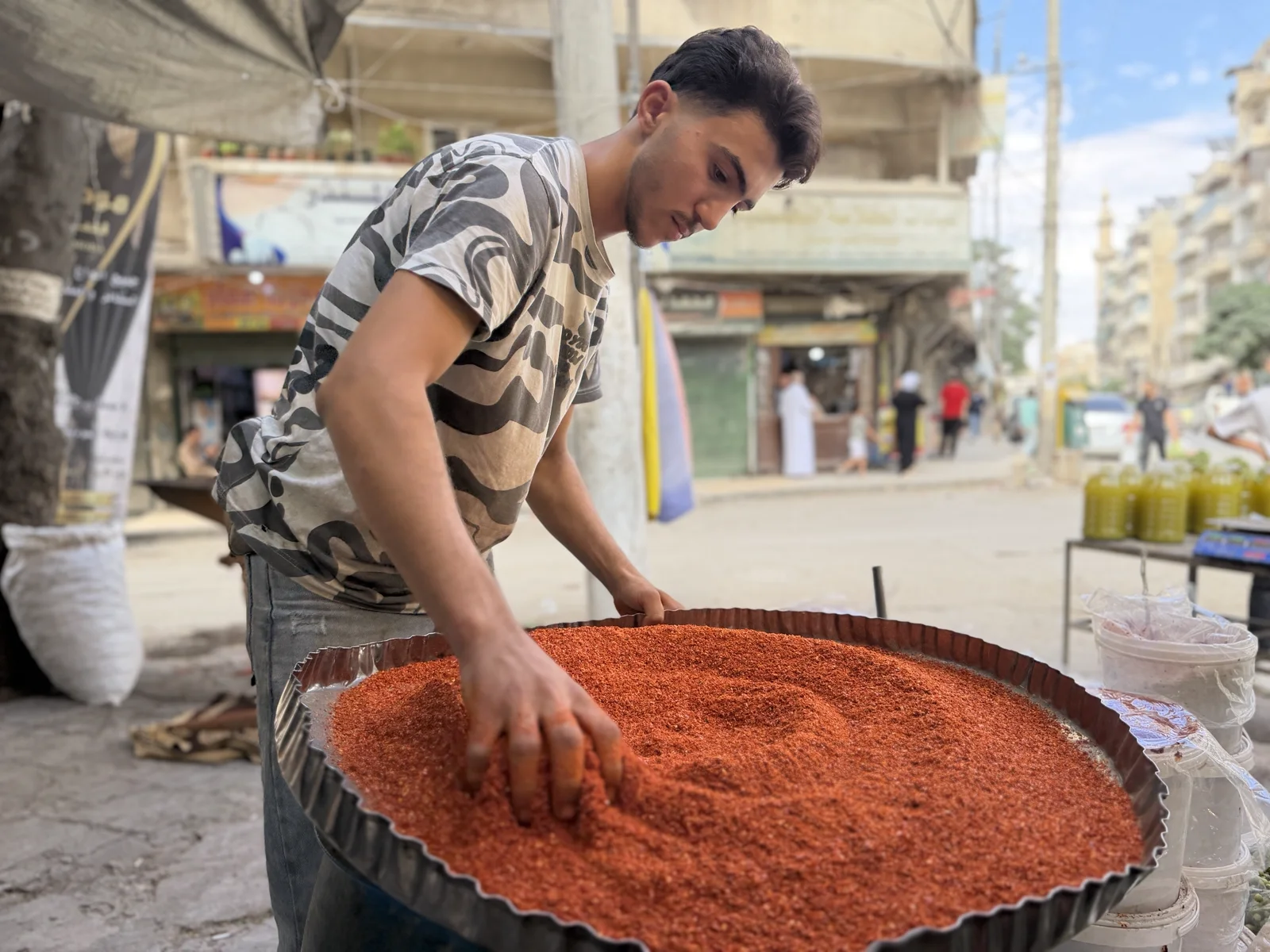
ALEPPO, Syria — The sidewalk in front of Muhammed Dbeghieh's shop. The roof above his home. If aromas had color, the air would be crimson.
Saturated, sweet, smoky, spicy.
Years and heaps of Aleppo peppers leaving their mark.
Dbeghieh runs a small pepper mill two blocks from his home down Gamal Abdel Nasser Street in Aleppo's Al-Kallaseh neighborhood.
It's small enough, unofficial enough that Google Maps is ignorant.
A small, concrete room that spills outward, no front or door. Grinders are grouped on the sidewalk. Buckets of brick red pastes stacked. Bags of dried peppers and herbs hanging.
Pedestrians must weave-navigate through it all. Probably that's the point. The crimson air draws you, holds you.
Men and boys gather much of the day, chatting not peppers, but politics.
You can buy your peppers from Dbeghieh. Or bring him your own.
If they are fully dried—you'll know because they sound like autumn leaves—he'll dump them into a hopper. It roars to life, turning them into mounds of siren-red flakes in seconds.
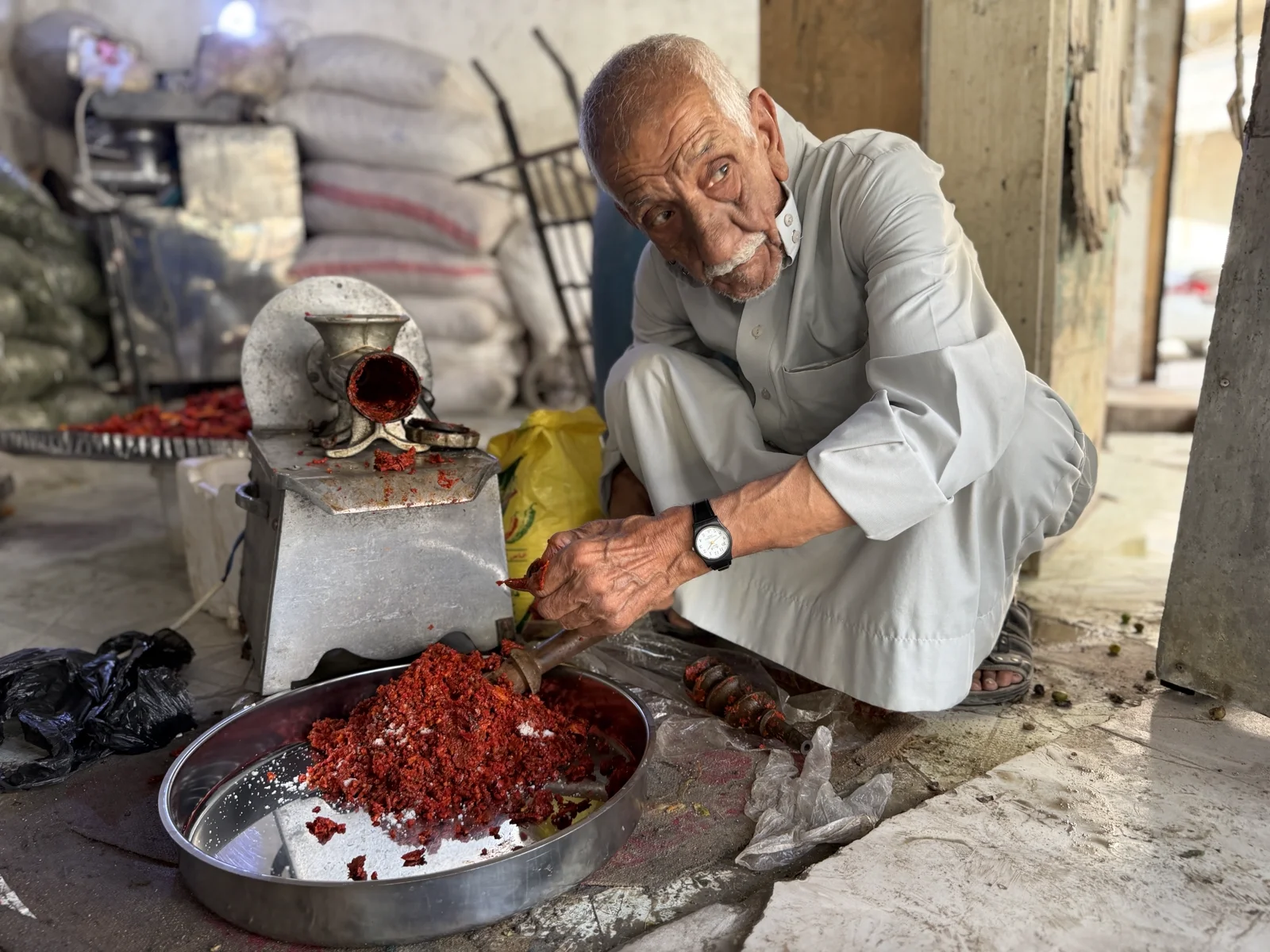
If they are only partly dried, he'll run them through a meat grinder. Twice. Pushing with a wooden pestle, adding just a touch of salt.
The tomato-like paste that results is essential. You can't make muhammara without pepper paste. Actually, it goes in almost everything in the Syrian kitchen.
If you buy his peppers, they are dried on his rooftop, an airy courtyard created by soaring walls of cinderblocks. He and his neighbor, Muhammed Ghazal, hoist themselves up.
It's blanketed with peppers, piles of them practically crackling under an intense sun.
Two days drying for peppers intended for paste. Six days for flakes.
"For us, Aleppo pepper is more important than bread," Ghazal told me.
Originally shared as a dispatch from the field. View the original post