Podibna, Ukraine
In Ukraine, the front line is felt even at the farmstand.
Nina Zurba’s roadside produce pays for medicine and sometimes meat. But war has slowed the traffic—and the lifeline it brings.
By J.M. Hirsch
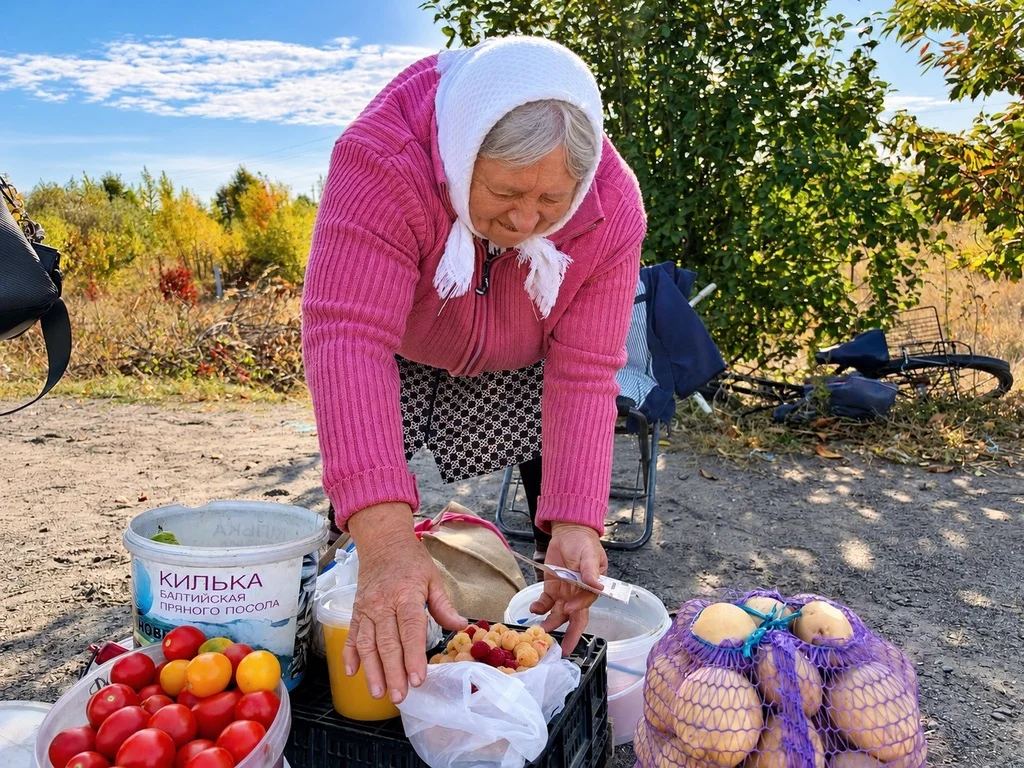
PODIBNA, Ukraine — It pays for medicine. Maybe some meat. The gossip is a bonus.
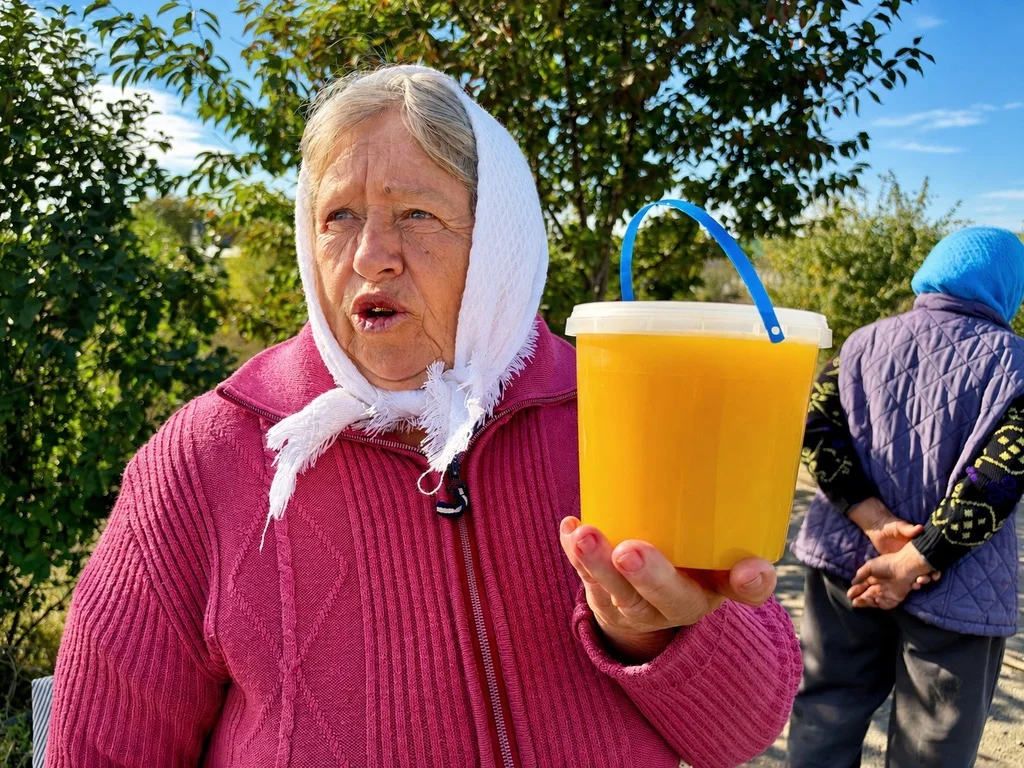
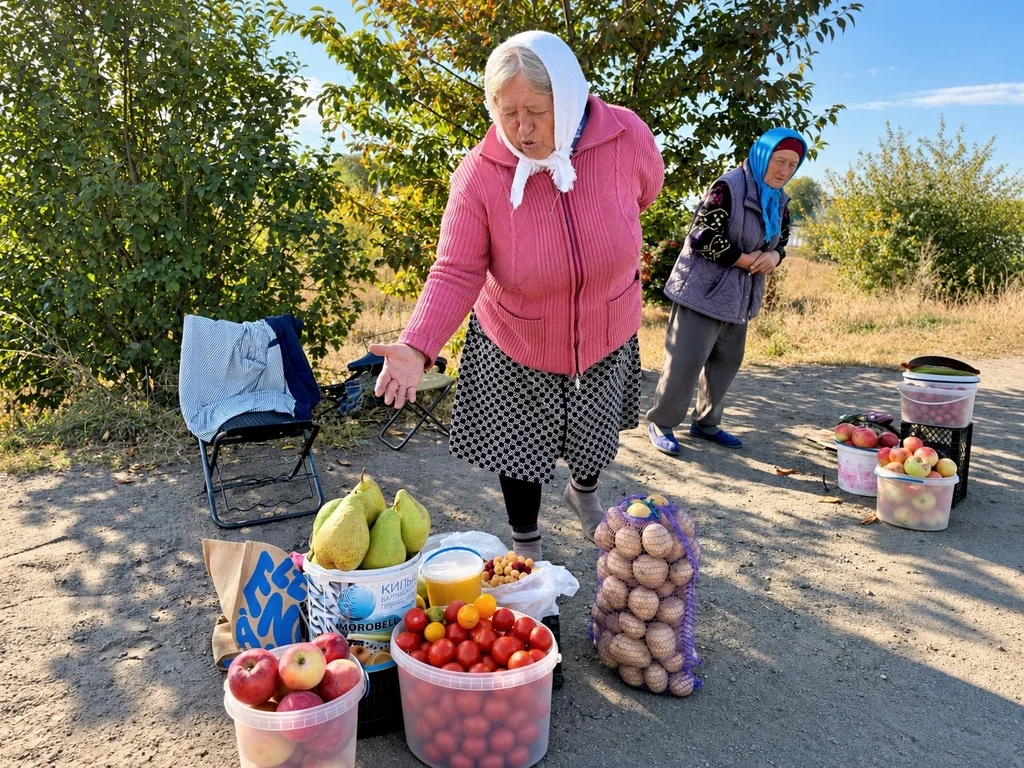
For a decade, twice or so a week, Nina Zurba has stacked her bicycle with the foods her family can spare. Today, it's apples and pears from the orchard. A bucket of small tomatoes. A mesh bag of potatoes. Honey her son-in-law gathered from bees that feast on marjoram and buckwheat. Massive gold and red raspberries that glow.
It's a precarious 3-kilometer pedal from her farm to reach the gravelly edge of Odesa Trasa, the long highway that stitches Kyiv to Odesa across swaths of farmland. There, like countless others up and down the roadside, she displays her offerings and waits.
"It could be 500 hryvnia. It could be 120 hryvnia," she said of her earnings, giving a smile that displayed a row of gold teeth. "Some days are really bad. Then I just go home."
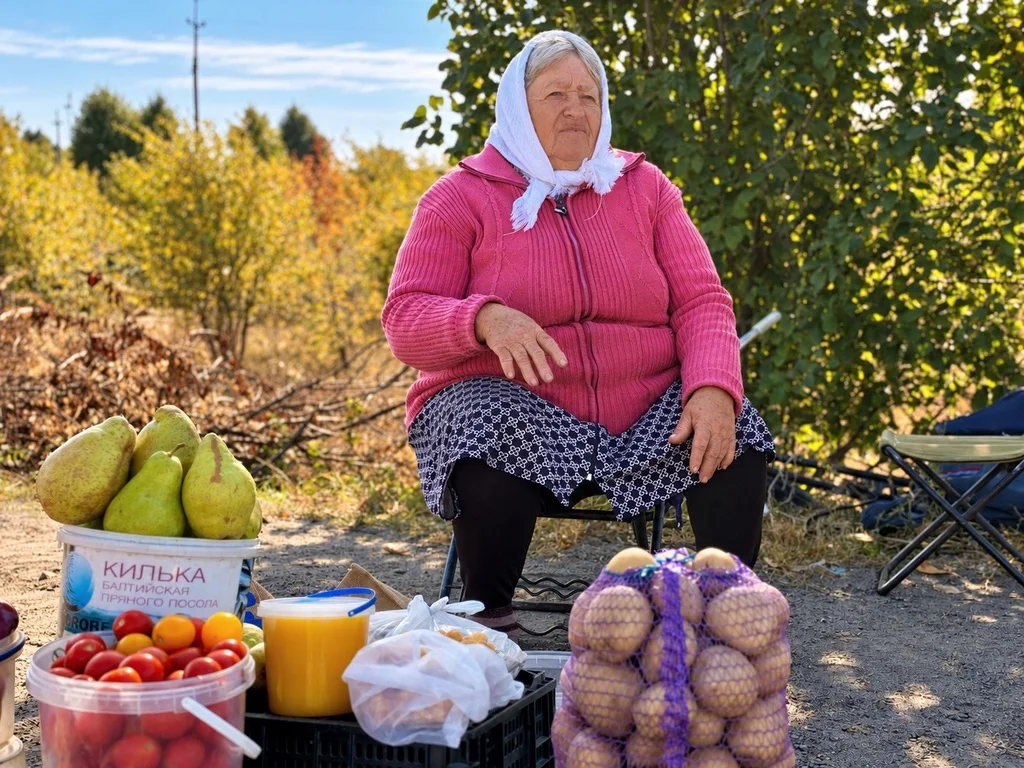
Lately, the bad days come often.
It used to make sense. Once a major artery, the road funneled Ukrainians and Belarusians to vacations along the Black Sea. Waves of truckers carted wheat and metals. It used to be easy.
Today, traffic is a trickle. And this lifeline for Zurba and so many others is yet another casualty of the war with Russia.
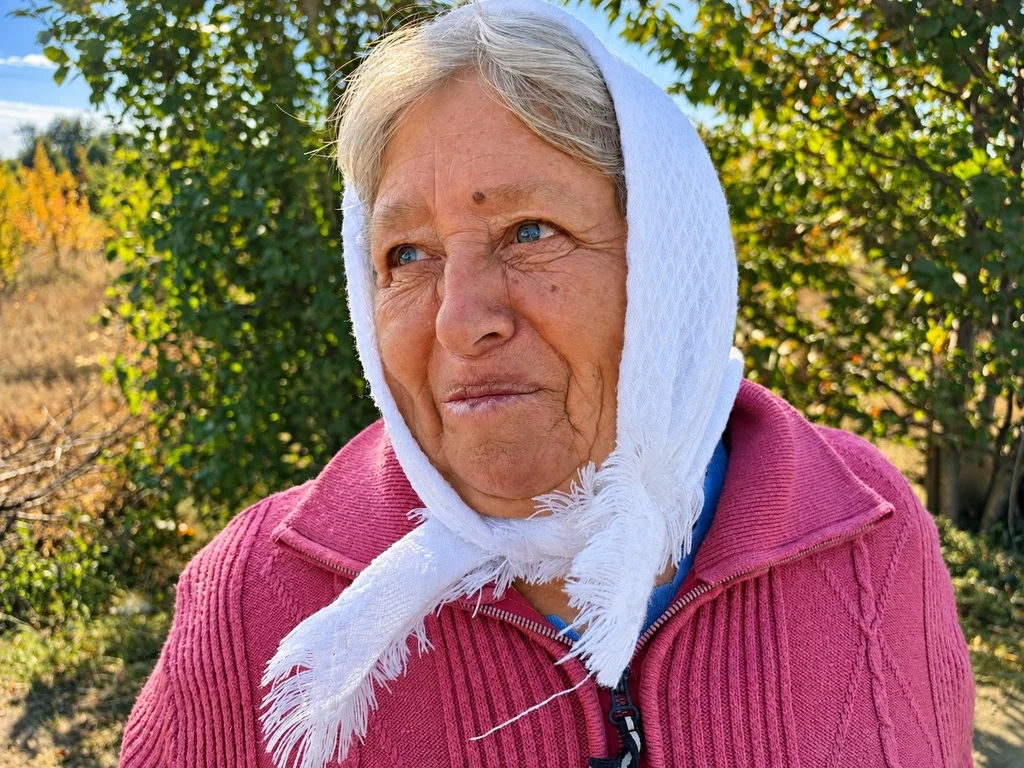
"Nobody goes to Odesa anymore," she said, waving her hands to the south. "Yesterday, Odesa was bombed."
By design, Zurba and her husband—whose heart keeps him from working—get by on little, extracting much of their lives from the land. Nearly everything they eat, they produce. The money she earns here pads that, paying for their medicine. Sometimes some pork, now that she's too old to care for pigs.
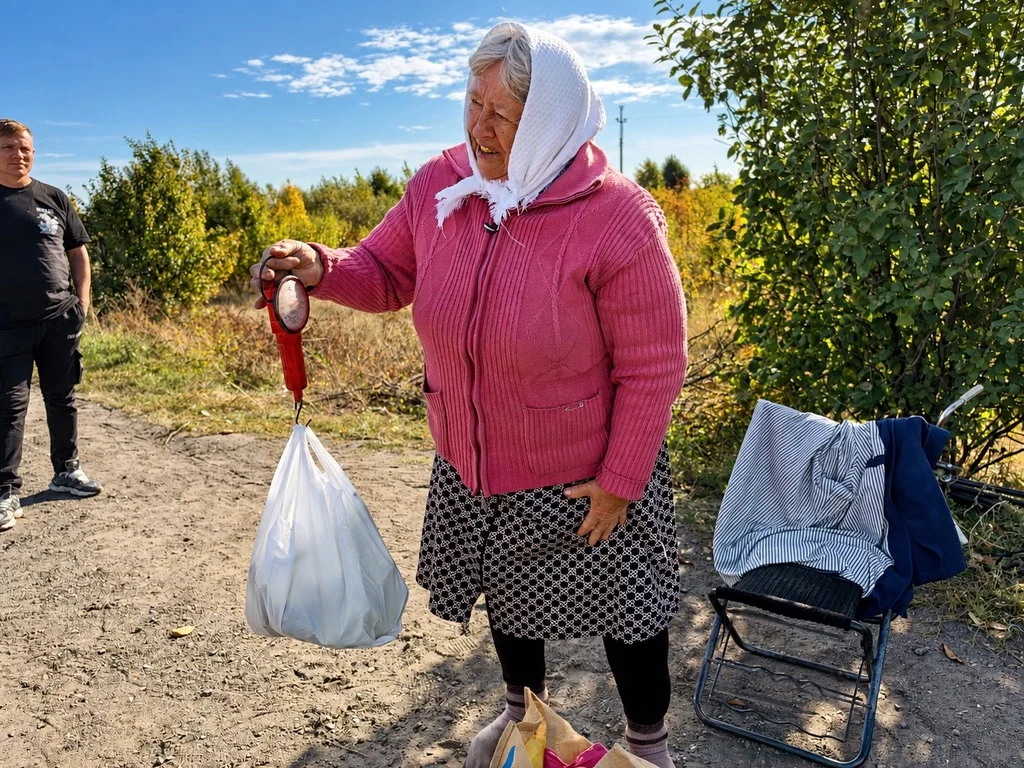
It's a story repeated up and down the highway. The war has taken all the able men, creating villages where elderly women and disabled men somehow must do it all.
Nearby, her friend offers similar produce, plus buckets of beans and hazelnuts, all of it whipped by dust and stones from cars racing past. Gossiping with her, Zurba said, is the best part of her day.
"At home, I am working too hard. Here, I can sit and talk."
She could move to the city, she said. But she won't. Her roots are here. Her parents died here.
"We are from the village. If you have your health, life is OK. We will survive."
Originally shared as a dispatch from the field. View the original post