Ghandouriyeh, Lebanon
On the Lebanon-Israel Border, Shawki Ghandoul's Olive Mill Offers Hope
In Ghandouriyeh, a rebuilt olive mill offers displaced farmers a way to turn a fragile harvest into income.
By J.M. Hirsch
GHANDOURIYEH, Lebanon — The evidence of war starts about 12 feet up. That's where an Israeli bomb blew off the top half of Shawki Ghandoul's olive mill earlier this year.
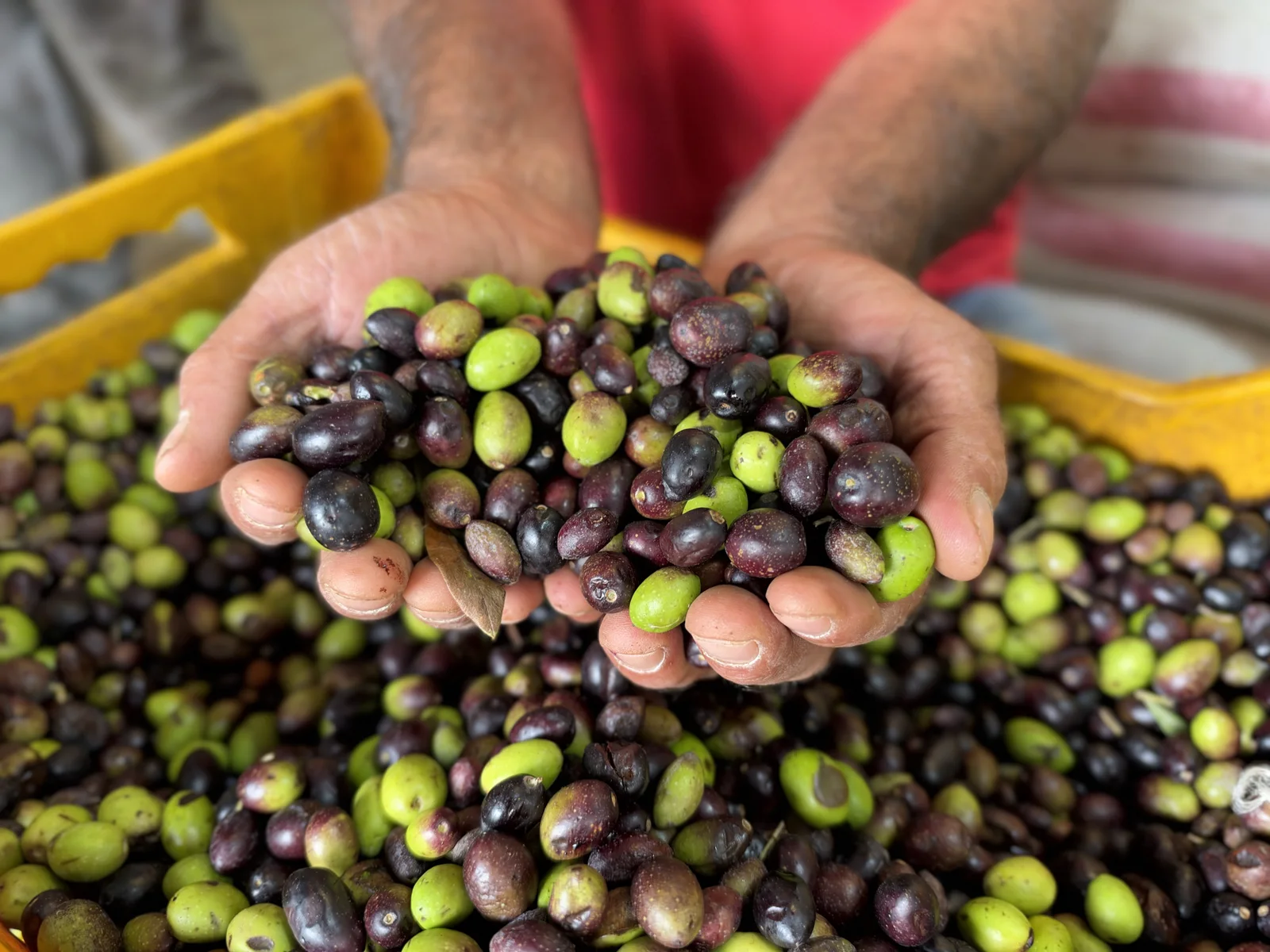
Today, that top half has been replaced by a patchwork of corrugated metal sheeting. And the massive circular stones once again swirl, smashing olives into viscous oil that fills the air with peppery-green.
Even over the roar of the mill, bombings still can be heard in the distance.
"The demolition and strikes are continuing about a kilometer from here," Ghandoul said. "It isn’t really safe around the village. But we’ve come back and life goes on. We’ve started opening up again."
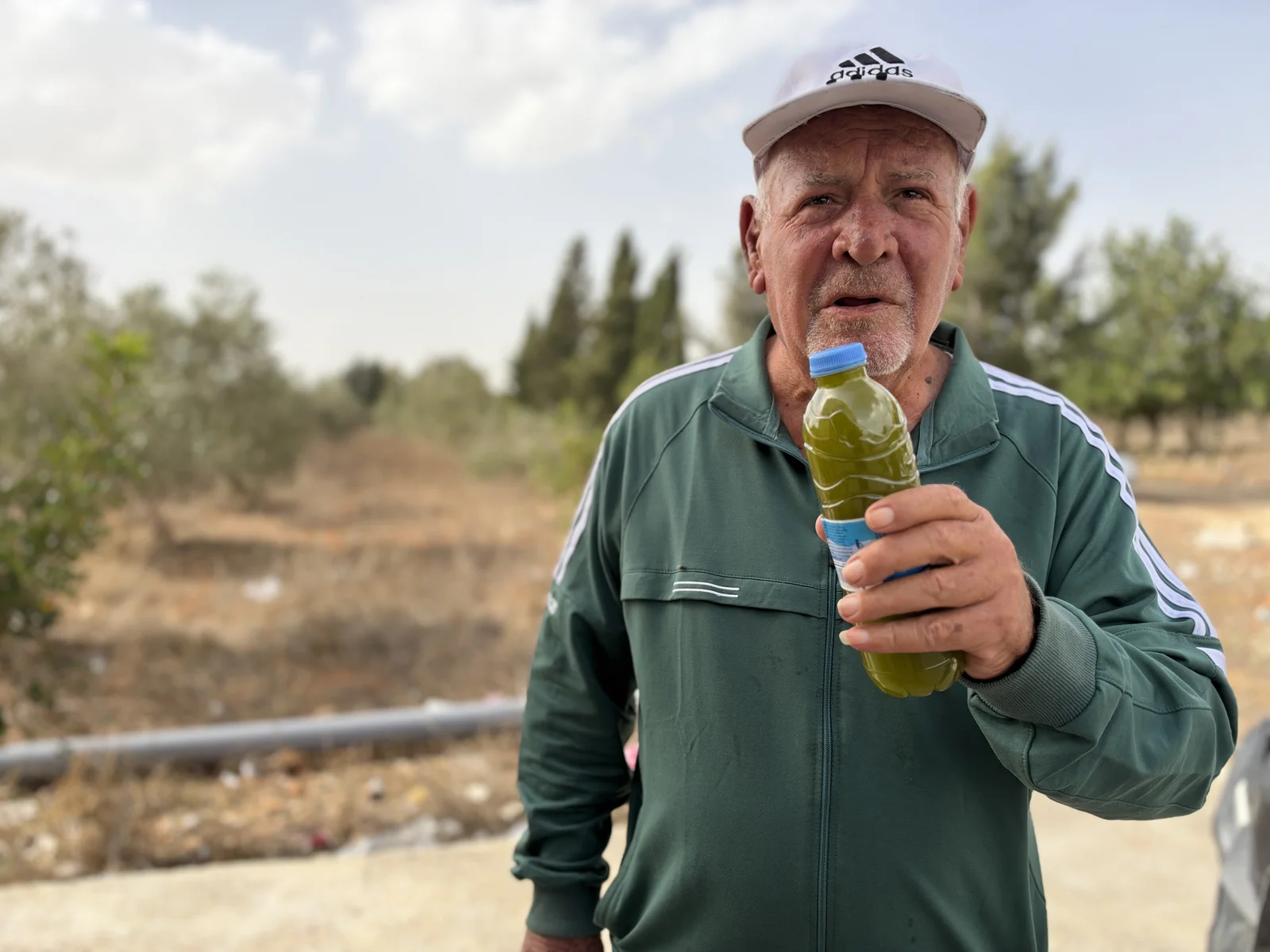
Ghandoul opened his mill 10 years ago. A retirement project after a career in banking and growing olives in his own time. He held up a bottle of impossibly green oil and smiled at it as he recounted planting olive trees on land he inherited from his father.
Land now dangerous to walk.
The mill is a lifeline for Lebanese farmers living along the so-called yellow zone, a broad swath of communities at the Israeli border that have been under near-constant attack.
Most of the farmers here are among some 200,000 displaced people. People whose homes and farms have been bombed or demolished, crops destroyed. They can see their lands, but aren't allowed on them.
For the few who have trees outside the yellow zone, Ghandoul's mill offers hope of a harvest they can turn into oil to sell. For many, their only source of income.
"People have lost their livelihoods," he said. "Even people with olive trees can’t harvest because they can’t get onto their land."
On this day, one farmer after another begged that a simple message be sent:
"Please tell the world that most of us do not support Hezbollah."
It's easy to point fingers in war. The region spiraled into chaos three years ago when Hezbollah launched rockets at Israel.
These farmers didn't ask for that. Or the horror that followed. They just want their land back.
And they live in fear that Israel will make good on threats to expand the yellow zone.
"At any time, any moment, a strike could happen here. Our village might be next," Ghandoul said. "They’re already at the boundary of the neighboring village, and we’re next to it."
Originally shared as a dispatch from the field. View the original post